Diagnostics / Screening
ChromoLogic is focused on developing advanced diagnostic and screening platform technologies, leveraging our expertise in optics, microfluidics, and innovative biomarker discovery. Our solutions have reached advanced stages of clinical trials, demonstrating the progress and potential of our cutting-edge research.
MiDOS
Measures the concentration of circulating micro RNA (miRNA) starting from 200 μl of whole blood (minimally invasive) collected from a patient with a lancet (no phlebotomist needed) and provide tissue specific injury from toxins (radiation, chemical) and capable of predicting systemic syndromes.
BICER
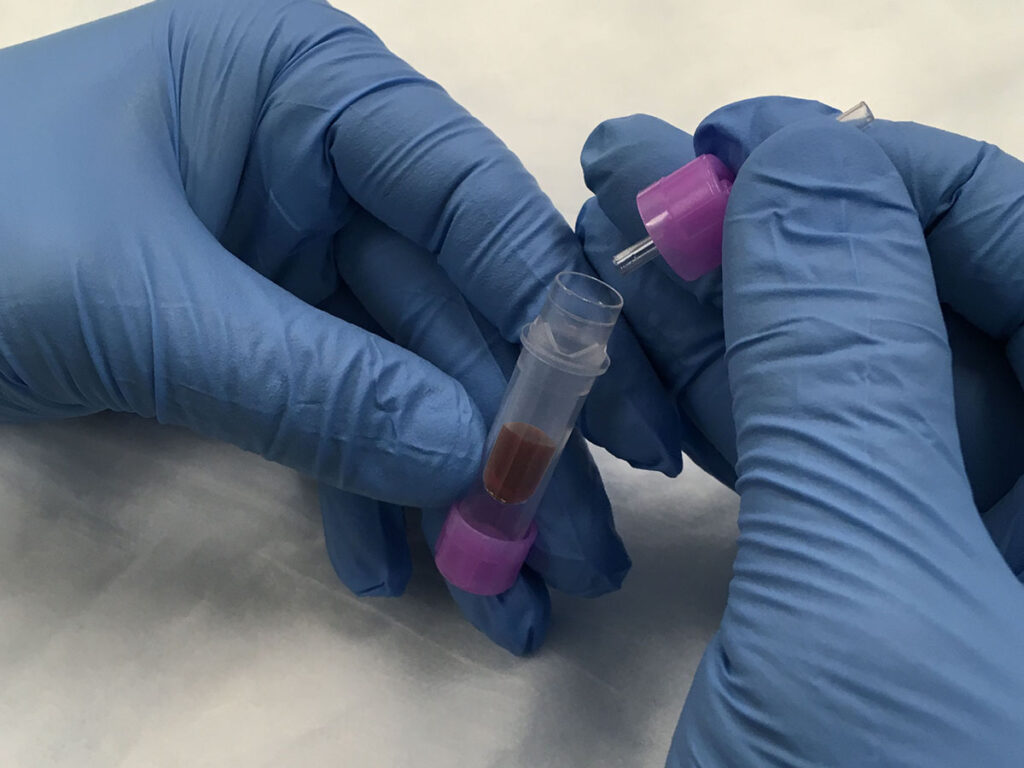
A simple, inexpensive unit for blood cell removal from small amounts of blood in resource-limited settings, based on the integration of two ChromoLogic patent-pending technologies: 1.) novel self-extraction technology for fluid collection and 2.) power-free tangential flow filtration technology for the removal of blood cells.
OFAM
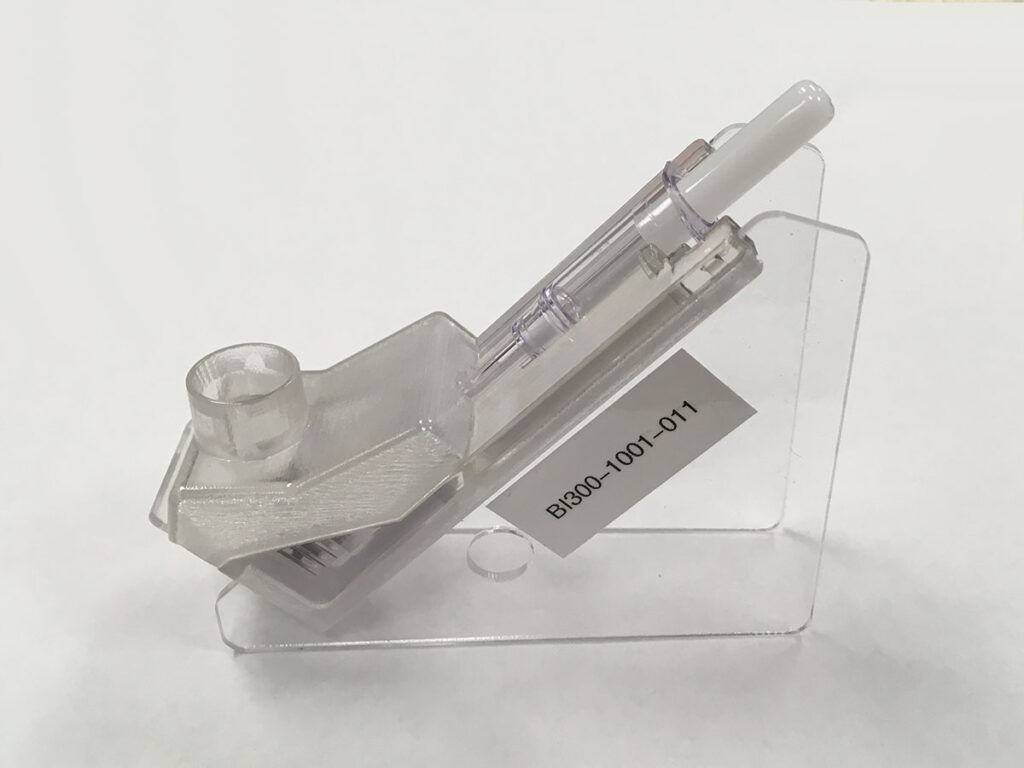
A simple, inexpensive unit for blood cell removal from small amounts of blood in resource-limited settings, based on the integration of two ChromoLogic patent-pending technologies: 1.) novel self-extraction technology for fluid collection and 2.) power-free tangential flow filtration technology for the removal of blood cells.
PANACIA™
Pathogen Agnostic Nucleic Acid Based Diagnostic for determining the causative agent of an infection within 4 hours of collecting 2ml of sample (whole blood, BALF, corneal swab). The >98% specificity and rapid turnaround time is designed to optimize treatment of sepsis – the second largest cause of mortality in a clinical setting.
MGEAS™
Microorganisms Genome Enrichment and Amplification Sequencing System detects viable organisms and their phenotype in low biomass samples such as sterilized medical products and cleanroom surfaces to mitigate the risk of inadvertent forward/backward contamination and ensure the safety and soundness of products/missions.

OCTiCell - CM-OCT
Cell Monitoring by Optical Coherence Tomography system that is based on Optical Coherence Tomography (OCT) to perform in-line, non-invasive, and non-destructive cell monitoring in dynamically growing cultures.

E-OCT
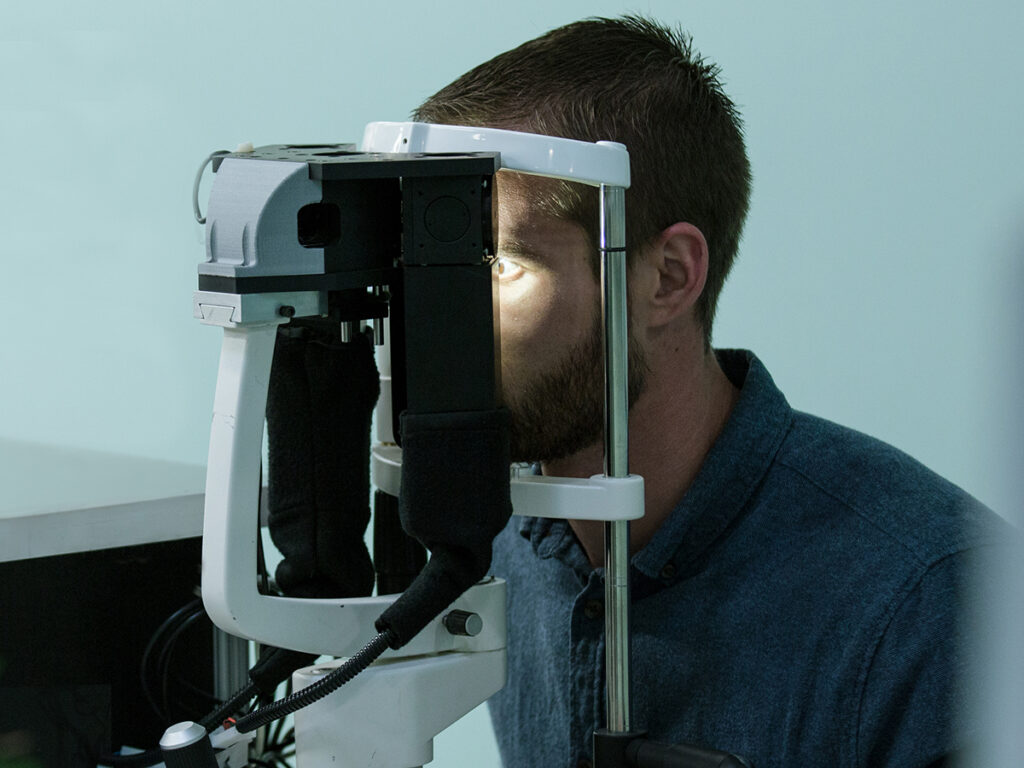
Provides non-invasive, non-destructive, real-time measurements of tympanic membrane and middle ear structure and biomechanics with high spatial (18x6x100 µm3) and temporal (50,000 scans per seconds) resolution. This allows the physician to examine the inner ear structures and quantify how each part of the ear responds to and transmits sound, allowing healthcare providers to characterize middle ear effusions and other dysfunctions in a way that was not previously possible. The optical fiber probe is integrated into an easy and safe-to-use digital otoscope, allowing the physician to insert and guide the probe inside the patient’s ear. The system is designed to be used by any healthcare provider who can operate an otoscope and only takes 10-15 minutes to complete structural and function tests.

QuickMag
Despite substantial progress in the diagnosis and treatment of malaria, it continues to threaten world health and economic development, especially in Sub-Saharan Africa where >90% of all malaria deaths take place. The main determinant of disease severity is the patient’s parasite burden. As these parasites digest the host’s blood, they produce insoluble microcrystals of hemozoin. By exploiting hemozoin’s unique magnetic and optical anisotropy properties, QuickMag system is capable of measuring hemozoin concentration from whole blood, enabling pre-symptomatic parasitemia detection, malaria speciation, and drug resistance monitoring. QuickMag is a high-throughput, battery-operated, point-of-care device for rapid and cost-effective surveillance of malaria infection.
CAPTIN-D
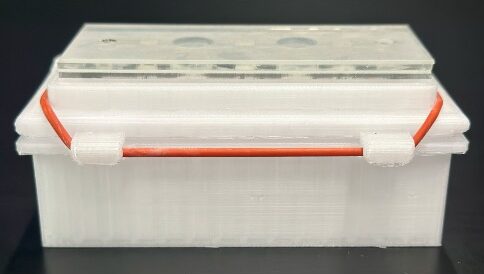
CRISPR-based Assay for Portable & Timely Infection Diagnosis (CAPTIN-D) is a fully self-contained, portable, in vitro diagnostic device that requires no electricity or batteries and combines PCR-level sensitivity and specificity with the simplicity of a rapid test. Within it, we combined synergistic molecular approaches for nucleic acid extraction, pre-amplification, and CRISPR-based detection. The intuitive user interface, with build-in controls and visual cues of the assay will make it simple enough to self-administer and interpret. Phase I prototypes reached the sensitivity of 10 parasites/µL during the 1-hour long assay on P.falciparum cultures in blood. Once mature, this technology will be applicable for other infectious diseases and sample types. We estimate it will take 3–5 days from target identification to test readiness.
WHERA
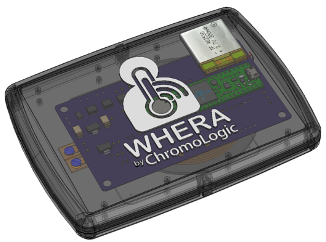
With climate change unfolding, temperature-related illnesses affect many individuals worldwide every year. Core body temperature is a reliable diagnostic of temperature-related illness and its severity, but the current measurement methods are inadequate because they fail to combine minimal invasiveness with high measurement accuracy. Dual-heat flux thermometry can measure core body temperature at the skin surface but has lacked precision and compactness. To address this problem, ChromoLogic is developing an ancillary Wearable Heat Related Injury Risk Analysis (WHERA) system which uses patent-pending thermally sensitive polymers in a dual-heat flux architecture to measure core body temperature noninvasively at the skin surface with high precision (10 mK thermal resolution). The wearable patch provides real-time monitoring for at-risk populations, including firefighters, industrial and agricultural workers, military personnel, athletes, and clinical patients.
RNET
We aim to develop an organ-on-chip in vitro model with higher levels of physiological fidelity than current technologies. Our model uses “reset” vascular endothelial cells that are capable of forming a self-assembled, adaptable, perfusable vascular network that can more realistically model the interactions between the vasculature, parenchyma, and immune cells. We have shown that RNet models display physiological immune-tumor interactions following radiation treatment, suggesting the utility of the model for understanding drug efficacy and safety without the need for animal models.
LR
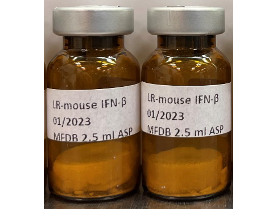
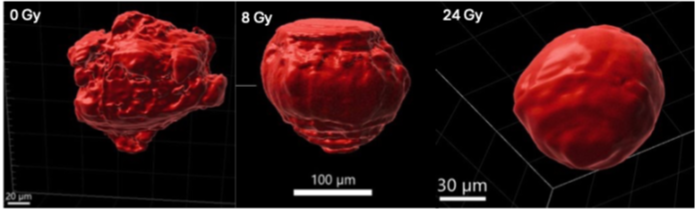
LR-IFN-beta is a novel drug to treat subjects at risk of developing intestinal crypt depletion after a radiological or nuclear incident, with the goal to increase survival in subjects exposed to doses of radiation capable of causing gastrointestinal acute radiation syndrome. We have shown LR-IFN-beta is capable of increasing survival from 0–10% to 60–70% following a single oral administration of the drug.